Why bone density starts slipping after 40 and where EMS training fits in
Why bone density starts slipping after 40 and where EMS training fits in
Many women do not feel “anything” happening to their bones in their 40s. That is the problem. Bone loss is silent until it is not, and the window when it accelerates often overlaps with a time when life is busy, recovery is slower, and traditional strength training can feel intimidating or hard to schedule.
Here’s the biological truth. As women move through the menopausal transition, changes in ovarian hormones shift the balance between bone breakdown and bone building. Research tracking women across perimenopause into early postmenopause shows that bone loss speeds up markedly in late perimenopause and continues into early postmenopause, with annual losses in the lumbar spine commonly around the low single digits and sometimes higher in the most accelerated phase. The Endocrine Society also emphasizes that menopause significantly speeds bone loss and that a meaningful share of total loss can occur around this transition.
So what does this have to do with exercise and EMS Fitness?
Bones respond to loading. When muscles contract against resistance, they tug on bone, creating the kind of mechanical stress that signals bone tissue to remodel and strengthen. If muscle strength and intensity of loading drop, bone gets less “reason” to stay dense. That is why resistance training and impact or weight-bearing activity are foundational for bone health, and why anything that safely helps a woman train muscles more effectively can matter.
This is where EMS comes in.
EMS training, explained in normal language
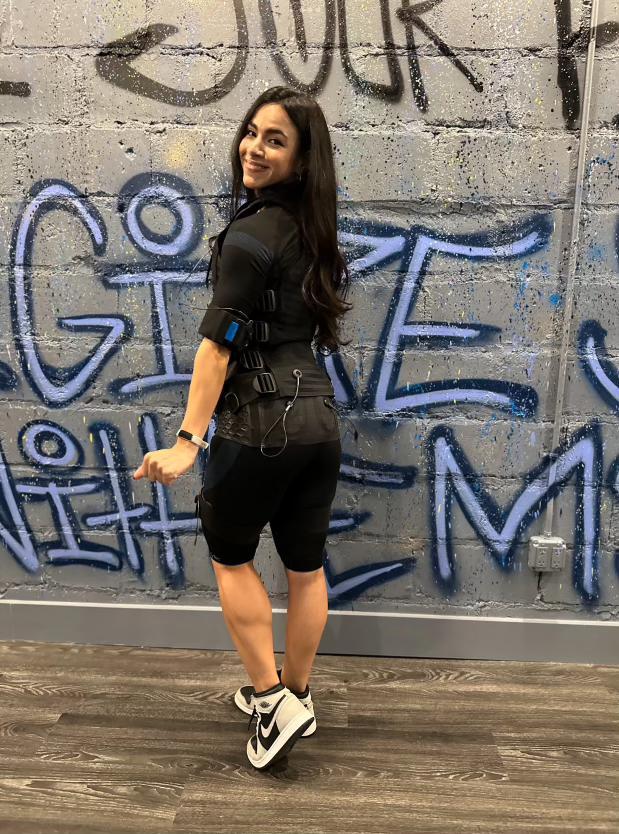
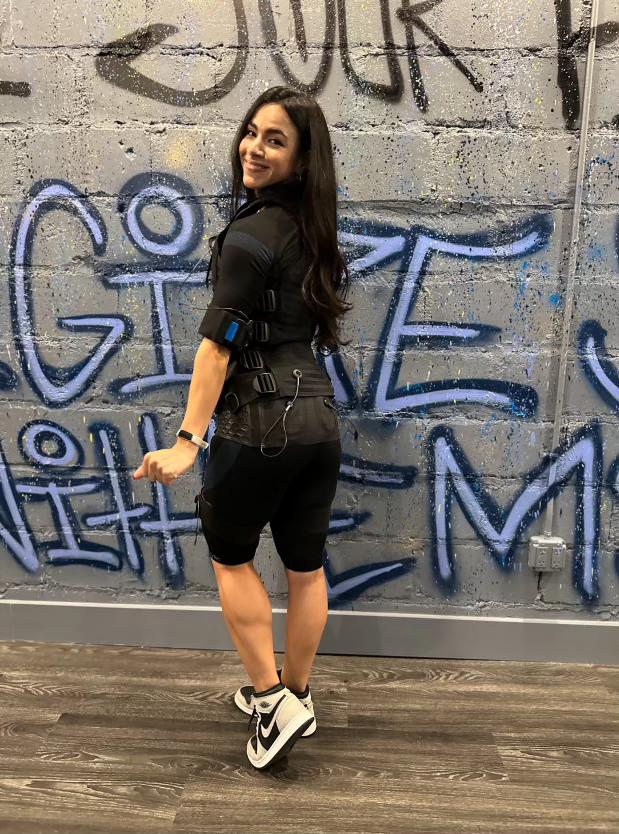
EMS is short for electromyostimulation, sometimes called electrical muscle stimulation. Some people casually describe it as “electro-magnetic,” but what most fitness studios mean by EMS training is controlled electrical impulses delivered through electrodes to stimulate muscle contractions while you perform guided movements.
Think of it as turning up the “signal” to recruit more muscle fibers during simple, joint-friendly exercises. You are not lying still while a machine does everything. In a well-run session, you move through squats, hinges, presses, pulls, and core work while the stimulation amplifies contraction. The goal is a high-quality training stimulus in a short session, often with lower impact than jumping-based workouts.
For women over 40, that combination can be attractive for three practical reasons.
First, time efficiency. When life is packed, consistency is everything, and shorter sessions can remove the biggest barrier.
Second, joint respect. Many women want strength work without feeling like they have to punish their knees, hips, or back to get results.
Third, intensity without intimidation. EMS can help you reach a meaningful muscular stimulus without needing to lift heavy on day one, which is often the psychological hurdle that keeps people from starting at all.
The bone density connection: what the evidence actually suggests
The cleanest way to talk about EMS and bone density is to be optimistic but precise. EMS is not a magic osteoporosis “cure.” It is a tool that can help create muscular tension and training consistency, and that matters because muscle and bone are coupled systems.
There is also direct research on whole-body EMS, often abbreviated WB-EMS, looking at bone outcomes in older women with low bone density. A randomized controlled trial in osteopenic women aged 70 and older compared WB-EMS training to a control program doing similar movements without EMS over about a year. The study found a borderline non-significant difference favoring EMS for lumbar spine bone mineral density, with the EMS group roughly maintaining spine BMD while the control group declined, and it also showed meaningful improvements in lean body mass and grip strength in the EMS group. (PMC)
That last part is not a side note. Strength and lean mass are not just “aesthetic” goals. They are part of how you keep loading your skeleton over time and how you reduce fall risk, which is a major driver of fractures later in life.
In plain terms, EMS training is promising for bone health because it can help you do the thing bones respond to: strong, repeated muscle contractions. The best case is that this supports maintaining bone density, especially at sites like the spine, while also building the strength that makes all other movement safer and more sustainable.
Why the timing matters after 40
Bone loss does not start the day you stop having periods. It begins to accelerate in the years leading up to the final menstrual period for many women, and the fastest phase often clusters around that transition. (PMC) That means waiting until your late 50s to “get serious” about strength is like deciding to start saving after the bill comes due.
If you are in your 40s and early 50s, you are in a leverage window. You are not trying to rebuild from scratch. You are trying to hold ground and, in many cases, improve strength and body composition so your bones keep getting the mechanical message that they are needed.
EMS can be especially helpful in this window because adherence is the real secret. The “best” program on paper is useless if it never happens. If EMS makes it more likely you will train consistently, it can become a practical bridge between wanting better bone health and actually doing something about it.
What a smart EMS plan for bone support looks like
The goal is not to chase soreness. The goal is progressive stimulus and consistency. EMS works best when sessions are coached, the intensity is progressed gradually, and the movements are structured like real strength training rather than random calisthenics.
Over time, many people use EMS in one of two ways. Some use it as their primary strength stimulus when time is tight. Others use it as a complement to more traditional resistance training and weight-bearing activity, especially when they want to train hard without piling on joint stress.
Either way, the win for bone health is building a routine you can keep. Strong muscles help you apply force to the skeleton. Better balance and coordination help prevent falls. More confidence in your body makes you more active overall, which means more daily loading across months and years.
The takeaway
After 40, bone density can decline faster than many women realize because the menopausal transition shifts bone remodeling toward loss, particularly around late perimenopause and early postmenopause. (PMC) Strength-focused training is one of the most direct ways to send your body a “keep this bone” signal, and whole-body EMS is a modern way to amplify muscle contraction and training efficiency. Clinical research in older osteopenic women suggests WB-EMS can help maintain lumbar spine bone density while improving lean mass and strength, which are both meaningful for long-term skeletal resilience. (PMC)
Try EMS with zero pressure
If you are over 40 and you have been telling yourself you will “start strength training soon,” this is your sign to start now in a way that feels doable.
Book a no-commitment EMS session. Come in once, get coached, feel what targeted contraction actually means, and leave with a clear plan for how EMS can fit your life. No pressure, no long-term contract, just a smarter first step toward protecting your bones and building a stronger body you can count on.