How EMS Training Can Help Preserve Strength and Metabolism
Losing Muscle With Age: How EMS Training Can Help Preserve Strength and Metabolism
As we age, our bodies naturally begin to lose muscle. Starting around age 35–40, most adults experience a gradual decline in muscle mass and strength. This condition is known as Sarcopenia, and it affects millions of people—often without them even realizing it.
Many people notice the symptoms slowly:
* Workouts feel harder
* Body fat increases even with the same diet
* Strength declines
* Energy levels drop
* Recovery takes longer
The key issue isn’t just aging. It’s lack of effective muscle stimulation.
The good news is that the right type of training can slow, stop, and even reverse muscle loss.
Muscle Loss Happens After 40
After 40, several biological changes occur that make maintaining muscle more difficult:
Hormonal changes
Levels of testosterone, growth hormone, and other anabolic hormones gradually decline.
Reduced muscle fiber activation
Traditional workouts often fail to activate all available muscle fibers, especially deep stabilizing muscles.
Slower protein synthesis
The body becomes less efficient at rebuilding muscle tissue.
More sedentary lifestyles
Modern work routines mean many adults spend long hours sitting.
Together, these factors contribute to a gradual loss of 3–8% of muscle mass per decade if no targeted training is performed.
Traditional Workouts Often Aren’t Enough
Many people assume that simply going to the gym will prevent muscle loss. While regular exercise helps, traditional workouts don’t always activate muscles efficiently.
During voluntary movement, the brain typically recruits only a portion of available muscle fibers. Deep muscle groups and fast-twitch fibers—the fibers responsible for strength, power, and metabolism—are often under-stimulated.
These are also the fibers that decline fastest with age.
That’s where EMS training offers a powerful advantage.
What Is EMS Training?
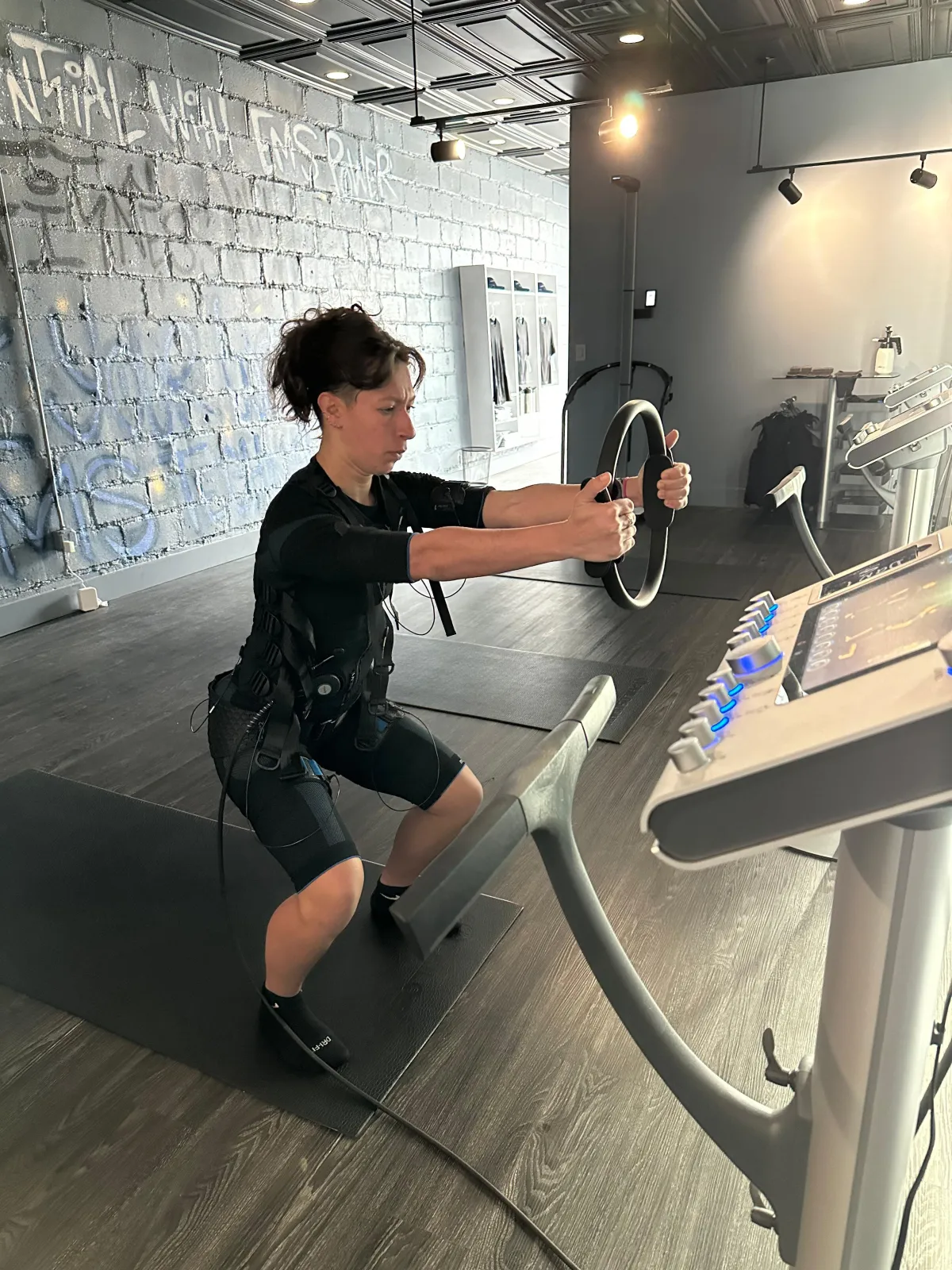
EMS (Electrical Muscle Stimulation) training uses controlled electrical impulses to stimulate muscle contractions during exercise.
This technology allows multiple muscle groups to contract simultaneously, helping activate far more muscle fibers than conventional workouts alone.
During a typical 20-minute EMS session, the body experiences:
* Deep muscle activation
* Full-body muscle engagement
* High-intensity stimulation with low joint impact
Because EMS recruits a much higher percentage of muscle fibers, workouts become more efficient and more targeted.
How EMS Training Helps Prevent Muscle Loss
EMS training supports healthy aging by addressing the core causes of muscle decline.
1. Greater Muscle Fiber Recruitment
EMS can activate both slow-twitch and fast-twitch muscle fibers, helping maintain strength and muscle mass.
2. Improved Metabolism
Muscle tissue plays a major role in calorie burning. Maintaining muscle helps support a healthy metabolic rate.
3. Low-Impact Training
EMS sessions are gentle on joints while still delivering powerful muscle stimulation.
4. Time Efficiency
A full-body EMS workout typically takes about 20 minutes, making it ideal for busy professionals.
5. Support for Bone Health
Strength training—including EMS-assisted training—can help support bone density as we age.
The Importance of Muscle for Longevity
Muscle is far more than a cosmetic feature. It plays a critical role in long-term health and quality of life.
Maintaining muscle mass helps support:
* Healthy metabolism
* Blood sugar control
* Joint stability
* Balance and fall prevention
* Overall mobility and independence
Research increasingly shows that maintaining strength and lean muscle mass is one of the strongest predictors of healthy aging.
⸻
EMS Training: A Smart Solution for Busy Adults Over 40
For adults who want efficient, effective workouts without spending hours in the gym, EMS training offers a modern solution.
With guided sessions and advanced muscle activation, EMS helps people:
* Maintain muscle
* Improve body composition
* Increase strength
* Support long-term health
All in a fraction of the time required by traditional workouts.
Final Thoughts
Muscle loss after 40 is common—but it is not unavoidable.
With the right training strategy, you can maintain strength, support your metabolism, and stay active for decades to come.
EMS training provides an efficient, science-backed way to stimulate muscles deeply and help your body hold on to the strength it naturally tries to lose with age.
Train smarter, not longer. Your future body will thank you.